



Published June 8, 2026
WWDC26 gave Apple the Siri reboot people have been waiting for, but the real story is not just that Siri is getting smarter. It is that Apple is trying to turn Siri into a system-wide AI layer while still convincing users, developers, and regulators that it can do that without breaking the privacy pitch that defines the iPhone.
Apple’s developer conference runs from June 8 to June 12, with the keynote and Platforms State of the Union kicking off the week. Apple said ahead of the event that WWDC26 would include AI advancements, new software, developer tools, more than 100 video sessions, Group Labs, and an in-person Apple Park gathering for over 1,000 developers, designers, and students, according to Apple’s WWDC26 announcement.
For casual readers seeing #WWDC trend, the useful version is simple: Apple announced iOS 27 and the next round of platform updates, but Siri AI is the update that will decide whether this year’s WWDC feels like a course correction or another promise to check back on later.
Apple finally made Siri the center of WWDC again
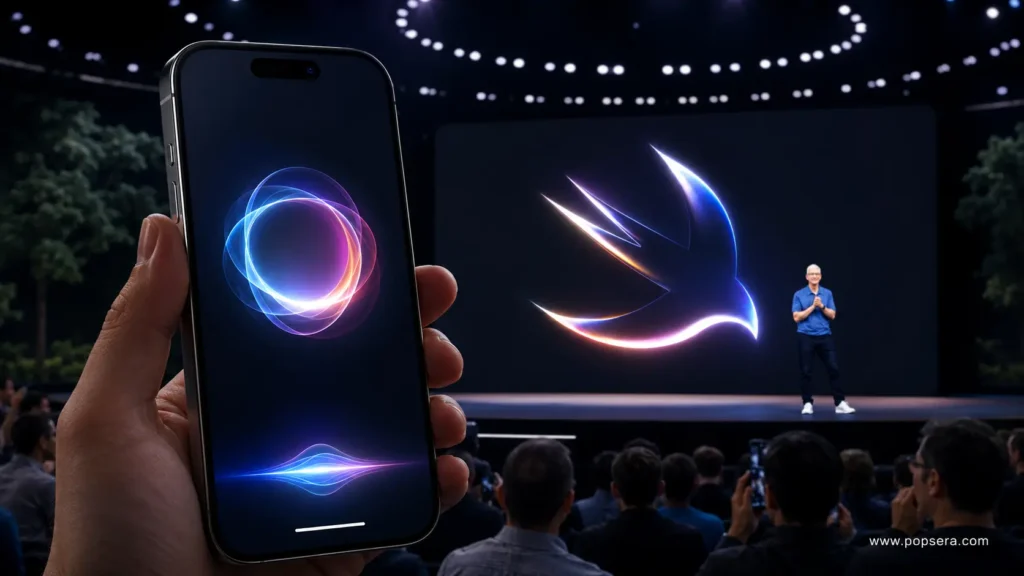
Apple is calling the new assistant Siri AI, an entirely new version of Siri powered by Apple Intelligence. The company’s Apple Intelligence page describes a much broader assistant than the old voice-command Siri: it can take actions in apps, tap into online knowledge, work through a dedicated Siri app, interact with what is on screen, and use Visual Intelligence through Camera and other interfaces.
That matters because Apple’s old Siri problem was not only that it answered fewer questions than modern chatbots. It was that Siri often felt disconnected from the phone itself. Apple is now pitching the opposite idea: an assistant that understands personal context, sees what you are looking at, and can help inside apps rather than just launch them.
Reuters reported from WWDC that Apple positioned Siri AI as a long-awaited overhaul after two years of work, with features including better voice recognition, a standalone app, screen awareness, web-based information, and the ability to refer back to earlier Siri conversations. The same report said Apple will start with English and did not give a more detailed language timeline.
iOS 27 looks like Apple’s cleanup year, not just its AI year
iOS 27 is not only a Siri container. Early coverage from The Verge’s WWDC report points to performance and design improvements, trust and safety updates, a Liquid Glass opacity slider, Apple Intelligence upgrades across apps, and iPhone support going back to the iPhone 11.
That combination is important. A huge AI pitch can create excitement, but the phone still has to feel better in ordinary use. Safari tab organization, smarter Passwords updates, Call Context, improved Photos tools, and generative Shortcuts only matter if they are reliable enough to become habits.
The sharper read: Apple is not trying to win WWDC with one flashy demo. It is trying to make Apple Intelligence feel like part of the operating system.
The EU delay is not a side note
Apple also confirmed a major availability split. In a June 8 update, the company said Siri AI will not ship in the European Union on iOS 27 and iPadOS 27 at launch because of Digital Markets Act issues. Apple said EU users will still be able to access Siri AI on macOS 27, visionOS 27, and watchOS 27, but there is no current timeline for iPhone and iPad availability in the EU.
That is where the WWDC story gets bigger than Apple fandom. The European Commission frames the DMA as a way to improve interoperability, data portability, and competition across major platforms, as outlined in its DMA smartphone interoperability factsheet. Apple, meanwhile, argues that the rules could force risky access to private device data when AI assistants become more capable.
Readers do not need to pick a legal side to understand the practical impact: Siri AI will not be the same WWDC story everywhere. For US, Canada, and Australia readers, the key question is when the beta features arrive, which devices qualify, and how many features stay English-only at first. For EU readers, availability is now part of the headline.
What is confirmed, and what still needs testing
- Confirmed: WWDC26 runs June 8-12, with Apple using the event to introduce new platform updates and AI-focused developer tools.
- Confirmed: Siri AI is Apple’s new AI-powered version of Siri, with a dedicated app, stronger personal context, Visual Intelligence, and deeper app actions.
- Confirmed: Apple says Siri AI will not launch on iOS 27 and iPadOS 27 in the EU at release because of DMA issues.
- Reported: Reuters says Apple did not provide a detailed timeline beyond an English-first rollout.
- Still unclear: How dependable Siri AI will be in daily use, how fast Apple expands language support, and which features will feel useful after the keynote glow wears off.
The real WWDC test starts after the keynote
Apple’s best WWDC keynotes make the next software cycle feel obvious. This one is different. Siri AI gives Apple a cleaner answer to the AI race, but it also creates a bigger promise: that the iPhone can become more helpful without becoming less private, more automated without becoming less controlled, and more open to developers without turning personal context into a free-for-all.
That is why #WWDC is trending beyond the usual developer crowd. The keynote introduced the features. The betas will show whether Apple can make them feel real.