


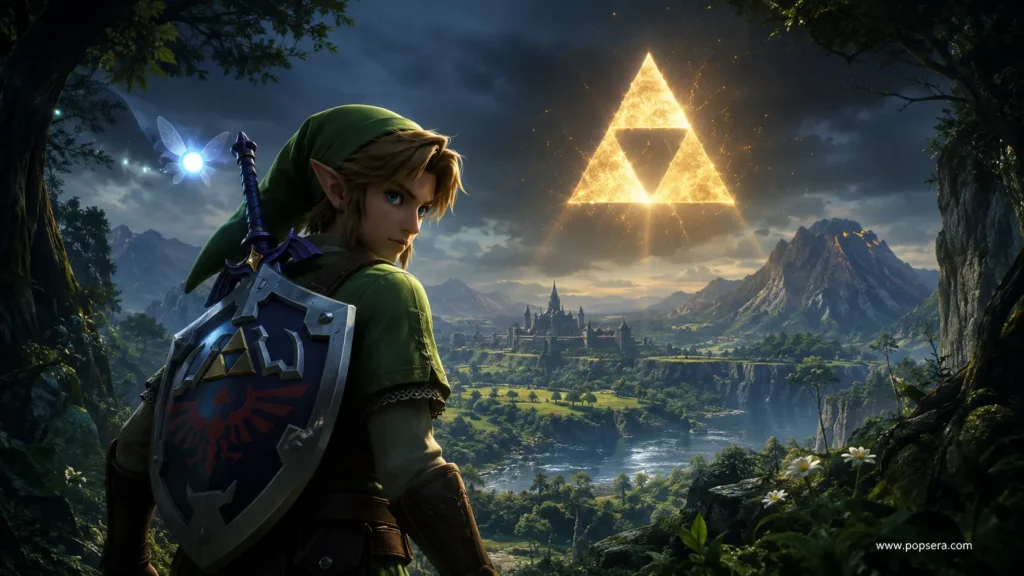

Nintendo has finally made the Ocarina of Time remake official. During its June 9, 2026 Nintendo Direct, the company confirmed that The Legend of Zelda: Ocarina of Time will return for Nintendo Switch 2 in 2026, ending months of leak-driven speculation around one of the most requested remakes in gaming.
The confirmation is simple. The details are not. Nintendo’s own Direct recap says the Nintendo 64 classic is “reborn exclusively for Nintendo Switch 2,” while the official teaser page only says “Coming 2026.” There is no exact release date, price, developer credit, gameplay breakdown, preorder listing, or confirmation of how much the remake changes from the 1998 original.
That is why this announcement lands differently from a normal nostalgia reveal. Ocarina of Time is not just an old Zelda game with famous music. It is the game Nintendo has to modernize without sanding away the design choices that made it feel strange, tense, and enormous in the first place.
What Nintendo has actually confirmed about the Ocarina of Time remake
Here is the clean version: The Legend of Zelda: Ocarina of Time is coming to Nintendo Switch 2 in 2026, and Nintendo is describing it as a game “reborn” for the new system.
That wording matters. Nintendo is not presenting this as a simple Nintendo Switch Online drop or a lightly upscaled port. It is also not calling it Ocarina of Time 3D for Switch 2. The official language points to a dedicated Switch 2 release, even if Nintendo has not yet shown enough to define the scale of the remake.
- Confirmed: The Legend of Zelda: Ocarina of Time is coming to Nintendo Switch 2.
- Confirmed: Nintendo lists the release window as 2026.
- Confirmed: The game is exclusive to Nintendo Switch 2, based on Nintendo’s announcement wording.
- Confirmed: The reveal came during the June 9, 2026 Nintendo Direct.
That is the reliable starting point. Everything beyond that needs more care.
What Nintendo has not said yet
The announcement was big, but the information drop was intentionally thin. GameSpot noted that the reveal showed no gameplay and centered on a cinematic teaser, while Game Informer described the trailer as a minimal setup focused on young Link and the Kokiri opening.
That leaves the most important questions unanswered:
- Will the remake keep the original dungeon layouts, or rebuild them?
- Will the camera, lock-on combat, item switching, and movement be modernized?
- Will Master Quest be included?
- Will Nintendo change controversial areas such as the Water Temple again?
- Who is developing the remake?
- Will it release physically and digitally on the same day?
- Will Nintendo price it like a full new Switch 2 release?
Those are not small details. They are the difference between a respectful visual rebuild and a full reinterpretation of one of Nintendo’s most important games.
The hardest part is not making Hyrule prettier
Ocarina of Time already received a major refresh once before. Nintendo’s UK page for the original notes that the 1998 game introduced 3D visuals to the Zelda series, along with a new combat system and a story that sent Link across Hyrule and through time. The same page describes Ocarina of Time 3D as a version with refined gameplay, overhauled visuals, touch-based inventory, and motion controls.
That history creates the remake’s biggest pressure point. Nintendo is not working from an untouched relic. It is revisiting a game that has already been ported, reissued, and reworked across multiple generations.
The obvious upgrades are easy to imagine: sharper environments, more expressive character models, smoother animation, richer lighting, cleaner UI, and a Hyrule Field that no longer has to feel stretched by Nintendo 64 hardware.
The harder question is what happens to the parts that feel old because they were designed with constraint. The pauses between areas. The silence of the field. The awkwardness of early 3D spaces. The sudden shift from childlike adventure to adult-world ruin. A remake can improve those things, but if it smooths every edge, it risks turning Ocarina of Time into a theme park version of itself.
This is not the same as playing Ocarina of Time on Switch Online
Players can already access the original Ocarina of Time through Nintendo’s Nintendo 64 Classics library with a Nintendo Switch Online + Expansion Pack membership. Nintendo’s listing includes Ocarina of Time alongside other N64 titles and notes Switch 2 compatibility for the collection.
That makes the new version a different proposition. Nintendo is not simply making the original playable on newer hardware. It is asking players to care about a separate Switch 2-exclusive remake while the older version remains available in subscription form.
For longtime fans, that raises a useful comparison. The Nintendo Switch Online version preserves the historical object. The remake has to justify itself as a new release.
Why the timing makes sense for Nintendo
The remake also arrives at a moment when Zelda is bigger than any single game. Nintendo is building the Switch 2 library, the Zelda franchise remains one of its safest premium brands, and the live-action Legend of Zelda movie is currently dated for April 30, 2027, according to reporting on Shigeru Miyamoto’s release-date update from Nintendo World Report.
That does not mean the Ocarina of Time remake is tied to the film. Nintendo has not said that. But it does create a clear franchise runway: a 2026 Switch 2-exclusive remake of the most famous 3D Zelda, followed by a theatrical push for the brand in 2027.
For Nintendo, that is useful. For players, it means the remake is not arriving in a vacuum. It is part of a period where Zelda is being positioned as a cross-media flagship, not just a series that waits years between mainline games.
The reveal told us less than the search results suggest
A lot of early coverage can only repeat the same facts because Nintendo has not opened the vault yet: the remake is real, it is coming in 2026, and the teaser was brief. That makes the next Nintendo update more important than the announcement itself.
The first gameplay footage will tell players whether Nintendo is aiming for preservation, modernization, or something bolder. The developer credit will also matter. So will any confirmation around dungeon design, optional challenge content, and whether the game keeps the original’s slower, moodier pacing.
For now, the safest read is this: the Ocarina of Time remake is official, but the version fans are imagining may not be the version Nintendo is making.
What to watch for next
The next meaningful update should answer at least some of these questions:
- Gameplay: Does it keep classic lock-on combat, or rebuild combat around modern Zelda expectations?
- World design: Is Hyrule still structured like the original, or are areas expanded?
- Dungeons: Are layouts preserved, adjusted, or redesigned?
- Content: Is Master Quest included?
- Release date: Is 2026 a holiday window or an earlier launch?
- Developer: Is Nintendo handling it internally, or is a partner studio involved?
Until Nintendo answers those, the smartest way to talk about the Ocarina of Time remake is with excitement and restraint. The game is real. The promise is huge. The hard part is still ahead.
Is the Ocarina of Time remake official?
Yes. Nintendo confirmed The Legend of Zelda: Ocarina of Time for Nintendo Switch 2 during its June 9, 2026 Nintendo Direct.
When does the Ocarina of Time remake come out?
Nintendo has only confirmed a 2026 release window. An exact release date has not been announced.
Is the Ocarina of Time remake coming to the original Nintendo Switch?
Nintendo’s announcement describes the remake as exclusive to Nintendo Switch 2. The original Nintendo 64 version is available through Nintendo Switch Online + Expansion Pack.
Did Nintendo show gameplay?
No. The reveal was a short teaser, not a full gameplay presentation.