



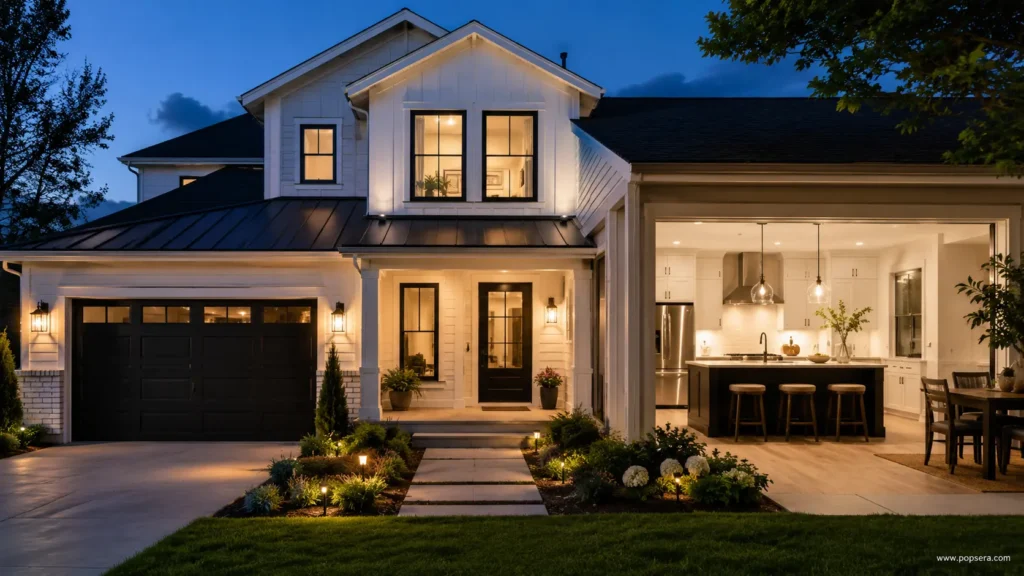

The best home improvements in 2026 are not always the biggest remodels. They are the upgrades that make a house feel cleaner, better maintained, easier to photograph, and less risky for a buyer to take on.

That is the useful shift for homeowners. A project does not have to be dramatic to improve resale value. A sharper exterior, fresh paint, updated lighting, a modest kitchen refresh, and repairs buyers will not have to negotiate later can do more than a flashy renovation that prices the home above the neighborhood.
The latest national resale studies point in the same direction. Zonda’s 2025 Cost vs. Value Report found the highest national returns in visible exterior projects, including garage door replacement, steel entry door replacement, manufactured stone veneer, and siding updates. The National Association of REALTORS’ 2025 Remodeling Impact Report also shows why the calculation is not only financial: homeowners consistently report more satisfaction after projects that improve function, comfort, and daily use.
In plain English: fix what buyers notice, avoid overbuilding for the neighborhood, and do not spend $80,000 trying to solve a $5,000 perception problem.
How to Choose the Best Home Improvements for ROI
ROI in home improvement is easy to misunderstand. A project with a 75% cost recovery does not mean the homeowner made money. It means the project may recover about three-quarters of its cost at resale, based on estimates and market conditions.
The rest of the value may show up in other ways. Better listing photos. More showings. Fewer inspection objections. A faster sale. Or a home that simply works better while the owner still lives there.
Before choosing any upgrade, pause for a quick resale check.
- Will this fix a visible weakness? Peeling paint, a dented garage door, stained grout, dim lighting, and damaged trim can quietly lower buyer confidence.
- Will this match the neighborhood? A premium kitchen in a modest starter-home market can be overkill. A clean, functional kitchen often performs better.
- Will this still look current in five years? Neutral, durable, easy-to-maintain upgrades age better than highly personal finishes.
The best home improvements are the ones that make a property feel cared for without making the next buyer feel like they are paying for someone else’s taste.
Financing matters, too. If a homeowner is borrowing against equity, the interest cost is part of the project cost. Before using a HELOC or home equity loan, compare payment scenarios with a reputable tool such as the U.S. Bank home equity calculator, and check current rate assumptions through the CFPB’s mortgage interest rate tool.
A renovation that looks smart on paper can become less attractive if the monthly payment stretches the household budget.
Best Home Improvements Under $500
The under-$500 category is not glamorous, but it may be the most underrated part of resale prep. These upgrades work because they remove doubt. Buyers may not compliment fresh caulk, clean baseboards, or matching outlet covers. They will notice when those details are wrong.
Deep cleaning and decluttering
Start here before touching a paint brush. A clean home photographs better, feels larger, and signals that the property has been maintained.
Focus on windows, baseboards, vents, cabinet fronts, appliances, grout, light fixtures, and entry areas. This is also the cheapest way to make every other improvement look better.
Paint touch-ups and one-room repainting
If the walls are mostly in good shape, touch-ups may be enough. If one room is doing too much, repaint it.
Bedrooms, living rooms, entryways, and powder rooms are strong candidates because they shape a buyer’s first impression quickly. For a deeper budget breakdown, link readers to Popsera’s paint-cost guide.
The short version: paint is most valuable when it makes the house feel cleaner, brighter, and easier to move into.
New hardware, outlet covers, and small fixtures
Cabinet pulls, doorknobs, switch plates, shower heads, towel bars, and mismatched hinges can date a home fast. Replacing them is not a remodel. It is visual cleanup.
Stay consistent. Matte black, brushed nickel, aged brass, and chrome can all work, but mixing too many finishes in one small home can make even new pieces feel accidental.
Caulk, grout, and minor bathroom repairs
Old caulk makes a bathroom feel older than it is. Re-caulk tubs and showers, clean or refresh grout, replace a stained toilet seat, and fix loose towel bars.
Some of the best home improvements at this price point are simple because they remove small signs of neglect.
Basic curb appeal cleanup
Pressure-wash the walkway, edge the lawn, refresh mulch, cut back overgrown shrubs, repaint or polish the mailbox, and replace dead plants near the entry. For a full pre-listing exterior sweep, use Popsera’s curb appeal checklist.
If the home has a front porch or stoop, treat it like a room. A clean doormat, working light, healthy planter, and freshly painted front door can do more than another decorative item inside.
Best Home Improvements Under $2,000
The $2,000 range is where small upgrades begin to feel more deliberate. This is the budget for fixing first impressions, refreshing high-touch spaces, and removing features that make buyers mentally subtract money.
Paint the front door or replace tired entry hardware
A full entry door replacement can cost more than $2,000 in many markets, but painting the existing door, replacing the handle set, and cleaning up trim can deliver part of the same curb-appeal effect for less.
The entry is one of the few places every buyer physically interacts with the home before they decide how they feel about it.
Upgrade lighting where the house feels dim
Lighting is a value play because it changes the way square footage feels. Replace dated flush mounts, add brighter bulbs in dark halls, and use consistent color temperature.
A home with yellow bulbs in one room, cool blue bulbs in another, and weak light in the kitchen will feel less polished even if the finishes are decent.
Refresh a bathroom without remodeling it
A full bathroom remodel can get expensive quickly. A targeted refresh can still help: new mirror, faucet, light fixture, toilet seat, shower curtain or glass cleaning, fresh caulk, updated towel bars, and a neutral wall color.
If the vanity is structurally sound, painting it may be better than replacing it.
Give the kitchen a small, visible lift
In many homes, the kitchen does not need to be gutted. It needs to stop looking tired.
Start with cabinet hardware, faucet, under-cabinet lighting, a clean backsplash, and fresh paint on walls or cabinets if the current finish is dragging the room down. For sellers, a modest kitchen refresh often beats a major renovation because it makes the space feel current without pushing the home beyond its market.
For many sellers, the best home improvements in the kitchen are refreshes rather than full renovations. Popsera’s kitchen-refresh guide is a natural internal follow-up here.
Fix inspection bait before listing
Loose railings, slow drains, missing GFCI outlets, sticky doors, cracked window panes, and small roof or gutter issues can all become negotiation points.
This is not the most exciting spending category. It is often the smartest.
Best Home Improvements Under $10,000
At $10,000, the stakes change. This is enough money to make a meaningful improvement, but not enough to recover from a bad choice. The goal is to pick projects that improve the home’s marketability without opening walls unless the home truly needs it.
Garage door replacement
Garage doors keep showing up near the top of resale-value lists because they affect curb appeal at scale. On many homes, the garage door is one of the largest visible exterior surfaces. If it is dented, faded, noisy, or dated, buyers notice before they get inside.
National cost data has been especially favorable for garage door replacement. Local quotes still matter. The safest version of this project is simple: choose a style that fits the house, avoid overly ornate designs, and make sure the opener, seals, and tracks are working properly.
Entry door replacement or a full entry refresh
A steel entry door replacement is another high-performing exterior upgrade in national cost-value data. If a full replacement does not fit the budget, a complete entry refresh can still help.
Think door paint, weatherstripping, hardware, house numbers, lighting, trim repair, and a clean path to the door. A front door should feel solid and welcoming, not like it belongs to a different house.
Partial exterior stone or siding repairs
Manufactured stone veneer and siding replacement rank well in national resale studies, but full exterior work can easily exceed $10,000 depending on home size and material.
If the budget is capped, look at targeted repairs first: damaged sections, rotting trim, missing siding pieces, faded shutters, or a tired entry façade.
Buyers do not need every exterior surface to be new. They need to believe the envelope of the house has been cared for.
Flooring fixes where buyers can see wear
Flooring has a direct effect on buyer psychology because it touches every room. If the home has hardwood floors, refinishing high-traffic areas may be more valuable than installing something new.
If carpet is stained or heavily worn, replacement in key rooms can change the whole showing experience. Do not use the cheapest possible flooring just to say it is new. Poor material choices can make buyers question the rest of the work.
A focused kitchen refresh
Under $10,000 is usually not “new kitchen” money, but it can be enough for a meaningful refresh: paint, hardware, lighting, faucet, backsplash, appliance replacement where necessary, and possibly countertops in a small kitchen.
The key is cohesion. One expensive feature surrounded by worn-out finishes can make the old pieces look worse. A balanced refresh often photographs better than one flashy upgrade.
Best Home Improvements for Exterior Resale Value
Exterior upgrades often perform well because they improve the first impression before a buyer starts looking for flaws. Garage doors, front doors, siding, roofing, trim, paint, landscaping, and walkways all shape the same message: this home has been maintained.
The best home improvements for exterior value usually work because buyers see them before they step inside.
That does not mean interiors are less important. It means interiors have to be chosen more carefully.
A buyer expects the kitchen and bathrooms to function well. They also expect the home to feel clean, bright, and move-in ready. But once a homeowner moves from refresh to renovation, costs rise quickly and taste becomes a bigger risk.
One buyer’s dream tile is another buyer’s demolition plan.
For resale, interior upgrades should usually follow this order:
- Repair anything broken, unsafe, leaking, or visibly neglected.
- Refresh paint, lighting, hardware, and flooring before replacing whole rooms.
- Keep kitchens and bathrooms neutral, functional, and consistent with the home’s price point.
- Avoid removing useful rooms or storage for a highly personal layout.
Exterior work gets buyers through the door with confidence. Interior work keeps them from mentally lowering the offer.
Best Home Improvements by Region: Why Local ROI Changes
No national ROI list can tell homeowners exactly what local buyers will value. A deck in a mild outdoor market, hurricane-rated openings in a coastal market, basement living space in the Northeast, drought-conscious landscaping in the West, and insulation in a cold-climate market can all make sense for different reasons.
That is why the best home improvements for ROI in 2026 should be filtered through region, climate, and neighborhood expectations.
Use this local test before committing:
- Check neighborhood comps. What do recently sold homes at the target price actually have?
- Ask what buyers expect, not what you prefer. In some markets, a finished basement is a major plus. In others, outdoor living space gets more attention.
- Factor in climate and insurance. Roofing, drainage, windows, defensible space, and storm resilience may matter more in risk-prone areas.
- Look for local rebates. Energy upgrades can become more attractive if state, utility, or local incentives reduce the net cost. ENERGY STAR’s rebate finder is a useful starting point by ZIP code.
Energy upgrades deserve special caution in 2026. IRS guidance says the federal Energy Efficient Home Improvement Credit does not apply to qualifying property placed in service after December 31, 2025. State, local, and utility rebates may still change the math, but homeowners should verify current eligibility before assuming a tax credit applies.
Best Home Improvements to Avoid Before Selling
Some projects can be wonderful for livability and weak for resale. That does not make them bad. It only means homeowners should not justify them with ROI math.
Major upscale kitchen remodels
Big kitchens can sell houses, but major upscale remodels are expensive and taste-heavy. If the owner is selling soon, a buyer may prefer a clean, updated, functional kitchen over a luxury kitchen designed around someone else’s preferences.
Upscale bathroom remodels and bathroom additions
Bathrooms matter, but high-end bathroom work can quickly outrun resale value. A better strategy is often to fix function first: ventilation, lighting, storage, clean tile, modern fixtures, and a layout that does not feel cramped.
Primary suite additions
A primary suite can improve daily life, especially for long-term owners. For resale ROI, it is risky because the cost is usually high and the buyer pool may not pay back the full investment.
If the home is missing a basic bedroom count for the neighborhood, the math may change. If it already functions well, be careful.
Pools in the wrong market
Pools are deeply regional. In warm luxury markets where buyers expect them, they may help. In colder regions, entry-level neighborhoods, or family-heavy markets where maintenance and safety concerns loom larger, they can narrow the buyer pool.
Over-personalized finishes
Highly specific tile, unusual paint colors, statement flooring, niche built-ins, and converted bedrooms can make a home memorable for the wrong reason. Zillow’s home improvement resale guidance flags several risky choices, including all-white kitchens, high-end marble flooring, garage conversions, and sacrificing a bedroom for a walk-in closet.
The resale rule is simple: the closer a homeowner is to selling, the less personal the renovation should be.
Resale vs. Livability: The Checklist Before You Spend
Not every project has to be about the next buyer. If the homeowner plans to stay for years, livability counts. The mistake is pretending a personal upgrade is a financial investment when it is really a lifestyle choice.
The best home improvements depend on whether the owner is selling soon, staying for years, or trying to balance both goals.
Use this checklist before approving a quote:
- If selling within 12 months: prioritize cleaning, repairs, paint, curb appeal, lighting, hardware, flooring touch-ups, and inspection issues.
- If selling in one to three years: choose midrange refreshes that can be enjoyed now and still look neutral later.
- If staying five years or more: weigh comfort more heavily, but avoid choices that would be expensive to undo.
- If financing the project: calculate monthly payment, interest, fees, and payoff timing before using ROI as the deciding factor.
- If the project fixes maintenance: treat it as protection, not decoration. Roof leaks, drainage issues, failing HVAC, and electrical problems should beat cosmetic upgrades.
- If the project is purely personal: do it for daily life, not because a future buyer might pay for it.
The best 2026 home improvement plan is not the longest one. It is the one that makes the home feel cared for, current, and appropriately priced for its market.
What are the best home improvements for ROI in 2026?
The best home improvements for ROI are usually curb-appeal upgrades, modest kitchen refreshes, paint, lighting, flooring fixes, and repairs that make the home feel move-in ready. Exterior projects such as garage door replacement, entry door upgrades, siding improvements, and clean landscaping often perform well because buyers notice them immediately.
Are kitchen remodels worth it before selling?
A small kitchen refresh is often worth considering before selling. A major kitchen remodel is riskier because the cost is high and design taste varies. If the cabinets, layout, and appliances are functional, start with paint, hardware, lighting, faucet, backsplash, and targeted appliance updates before committing to a full renovation.
Should I improve the exterior or interior first?
If resale is the goal, start with the exterior if it looks neglected. Buyers judge the home before they enter it. After that, focus on interior repairs, paint, lighting, bathrooms, kitchen condition, and flooring. Exterior projects build confidence; interior projects prevent buyers from discounting the home.
What home improvements should I avoid before selling?
Avoid highly personal, expensive projects unless the local market clearly supports them. Common resale risks include luxury kitchen remodels, upscale bathroom remodels, primary suite additions, garage conversions, pools in the wrong climate or price tier, and bold finishes that many buyers may want to replace.
How should I choose projects if I plan to stay in the home?
If staying five years or more, livability should carry more weight. Choose upgrades that improve daily comfort, reduce maintenance, or lower operating costs. Still, keep permanent finishes reasonably timeless if resale value matters later.