



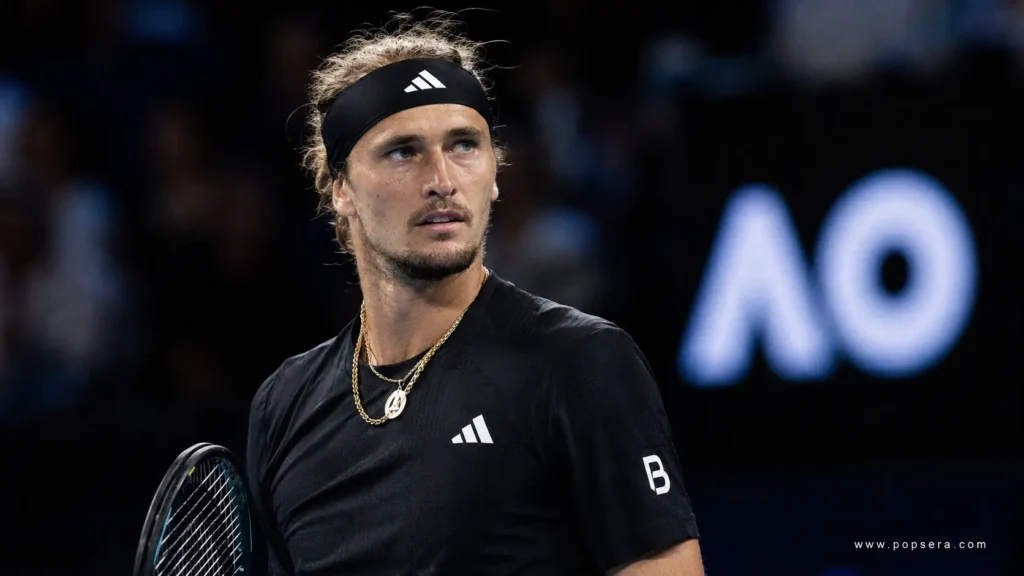

Alexander Zverev opened the French Open men’s final like a player who understood exactly what was sitting in front of him.
The German No. 2 seed took the first set 6-1 against Flavio Cobolli in 35 minutes on Court Philippe-Chatrier, according to Roland-Garros’ official live updates. Cobolli, playing his first Grand Slam final, struggled to settle early and made 16 unforced errors in the opening set.
For Zverev, it was more than a clean start. It was the kind of start he needed in a match carrying years of near-misses, pressure, and one very clear question: is this finally the day he wins a major?
The first set gave Zverev exactly the rhythm he wanted
Zverev broke Cobolli in the opening game and quickly pushed the Italian into chase mode. By the time the set reached 4-1, the match had already taken on a clear shape: Zverev was steady, Cobolli was pressing, and the favorite was forcing the newcomer to play from uncomfortable positions.
The context matters. Cobolli had not played since Wednesday after Matteo Arnaldi withdrew from their semifinal because of illness, giving the Italian extra rest but also removing the normal rhythm of a Grand Slam semifinal. Roland-Garros noted before the final that Zverev entered with a 3-1 head-to-head lead over Cobolli, including a Madrid win earlier this clay season after Cobolli beat him in Munich.
That familiarity showed early. Zverev did not have to chase highlights. He served, absorbed pressure, and let Cobolli’s nerves do some of the work.
Why this final is bigger than another Zverev deep run
Zverev has been here before, which is exactly why this match carries so much weight.
The 29-year-old is playing the fourth Grand Slam final of his career after losing the 2020 US Open final, the 2024 French Open final, and the 2025 Australian Open final, as AP’s French Open preview noted before Sunday’s match. He also returned to Paris with unfinished business after losing the 2024 Roland-Garros title match to Carlos Alcaraz.
This year’s draw made the opportunity sharper. Alcaraz withdrew before the tournament with a wrist injury, Jannik Sinner exited early, and Novak Djokovic was also eliminated before the second week turned into the kind of familiar heavyweight obstacle course that has blocked Zverev before.
That does not make a Grand Slam final easy. It does make the stakes harder to ignore.
Cobolli arrived as the surprise finalist, not a passenger
Cobolli’s first set was rough, but his run to the final was not a fluke. The 24-year-old Italian reached his first major title match after a tournament that pushed him into the top tier of tennis conversation, and he entered Sunday with a chance to become the first Italian man to win Roland-Garros since Adriano Panatta in 1976.
He also came in with proof that he can bother Zverev on clay. Reuters noted that Cobolli beat Zverev in Munich earlier this season before Zverev answered with a straight-sets win in Madrid, a split that gave the final a more interesting edge than the rankings alone suggested.
Still, a first Grand Slam final asks a different question. Cobolli’s biggest challenge after the first set was not talent. It was whether he could slow down, stop donating errors, and force Zverev to win points under heavier scoreboard pressure.
What Zverev has to manage from here
The clean opening set helps Zverev, but it does not erase the history attached to his name in major finals. He has had big leads in Grand Slam title matches before. The real test is whether he can keep the match on his terms if Cobolli finally settles.
The signs to watch are simple: Zverev’s first-serve control, Cobolli’s error count, and how the German handles the first genuinely tense service game. If Zverev keeps earning free points and avoids giving Cobolli a crowd-driven comeback lane, this could become the breakthrough he has been chasing for most of his prime.
For now, the headline is clear: Zverev has started like the favorite. The harder part is finishing like one.



[…] Alexander Zverev Starts Fast in French Open Final Push […]