


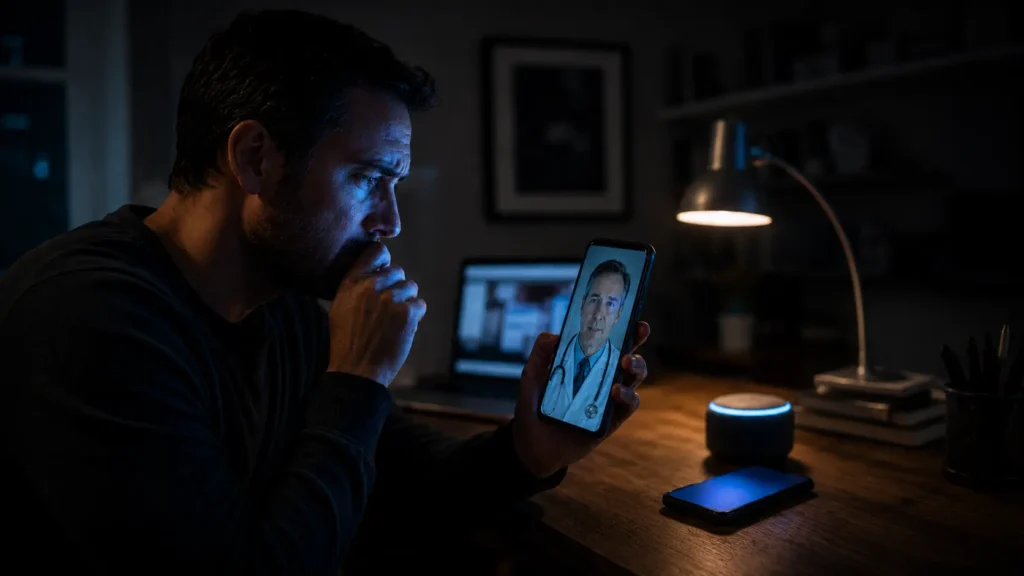

The latest AI scams do not always show up as suspicious emails or odd texts. Sometimes, they look like a doctor in a white coat giving advice on social media.
AI-generated doctors, deepfake physician videos, and voice cloning scams are all creating a bigger problem: people can no longer trust a face, a voice, or a polished video as proof that something is real. The American Medical Association now warns that AI impersonations of doctors are a public health and safety issue, and is calling for stronger protections to stop fake medical endorsements before they spread.
Why AI Doctor Deepfakes Are Trending Now
AI doctor deepfakes are getting attention because they target one of the most sensitive forms of online trust: health advice.
ReAxios recently reported that more doctors are being used in deepfake videos to promote questionable products or spread misinformation. The problem is not just that the videos are fake, but that they can look familiar, professional, and convincing enough to make people hesitate before questioning them. That is what sets these scams apart from older online health misinformation. A random miracle-cure post is easy to ignore. A video that looks like a real doctor endorsing a product is much harder for most people to dismiss.
The risk is clear: the person on screen may never have said those words.
Embed the AMA’s X post about physician deepfake protections here to show the official policy push directly from the organization. The AMA’s post says AI deepfakes impersonating physicians are a patient-safety risk and points to its new framework.
What the AMA Is Asking For
On April 29, 2026, the AMA announced a policy framework to protect physicians from unauthorized AI-generated deepfakes. The framework focuses on manipulated images, videos, audio, voices, and digital replicas that can make it appear as though a doctor endorsed a product, authored advice, or participated in content they never approved.
The group wants physician identity treated as a protected right. That includes a doctor’s name, image, likeness, voice, and digital replica. The AMA also says deceptive AI-generated or altered content should be prohibited when it falsely suggests a doctor’s endorsement or authorship and is likely to mislead patients.
The framework also calls for plain-language labels, digital watermarks, rapid takedown systems, better documentation tools for doctors, and shared responsibility among platforms, hospitals, AI vendors, and other institutions.
The AMA is not treating this as just a reputation issue for doctors. It is framing deepfake medical impersonation as a patient safety problem.
Why Fake Medical Advice Can Spread So Fast
Health content spreads quickly online because it taps into fear, hope, pain, aging, weight loss, chronic symptoms, or insecurity. AI makes that environment even easier to manipulate.
A fake doctor video can use all the signals of credibility: a clinical setting, a calm voice, medical language, and a direct recommendation. The viewer may not know if the person is real, if the audio was cloned, if the clip was edited, or if the product being promoted has any real evidence behind it.
That creates a messy information gap. By the time a doctor, platform, or fact-checker spots a fake, the video may already have been copied, reposted, clipped, or turned into ads.
For users, the rule is simple: do not treat a viral medical clip as real advice just because it looks professional.
Voice-Cloning Scams Are the Same Trust Problem
The doctor deepfake story is part of a wider synthetic-media scam wave. Voice cloning is already being used in fake emergency scams, where fraudsters impersonate family members, friends, lawyers, police officers, or doctors to pressure someone into sending money quickly.
The Federal Trade Commission warns that scammers can use a short online audio clip and voice-cloning software to make a call sound like someone the victim knows. These scams often rely on urgency, secrecy, and emotional pressure.
The FBI has also warned about malicious messaging campaigns that use AI-generated voice messages and texts to impersonate senior U.S. officials. In those cases, the goal can be to build trust, move the target to another messaging platform, steal information, or gain access to accounts.
The targets may change, but the tactic is the same: use synthetic media to hijack trust.
How to Spot an AI Medical Impersonation Scam
Deepfakes are improving, so visual glitches are not enough. A strange mouth movement, odd lighting, robotic phrasing, or mismatched audio might be a warning sign, but a clean video can still be fake.
A stronger test is context.
Be cautious if a video shows a doctor or medical expert making big promises. Watch for miracle-cure language, pressure to buy right away, claims that doctors are hiding something, or links that go straight to a supplement, weight-loss product, anti-aging treatment, or private checkout page.
Check if the doctor posted the same video on a verified website, hospital profile, or official social account. Search the doctor’s name with the product. Look for credible medical sources before acting on any claim.
Most importantly, do not start, stop, or change treatment based on a social media clip. Use viral health content to ask better questions, not as a replacement for a qualified clinician.
What To Do About Voice-Cloning Calls
For voice scams, the safest response is to break the emotional rhythm of the call. u already know. Ask a question only the real person would understand. Set a family code word for emergencies. Refuse requests to send money through gift cards, cryptocurrency, payment apps, or wire transfers without independent confirmation.
The FTC has also explored technical defenses through its Voice Cloning Challenge, which focused on ways to reduce the misuse of AI-enabled voice cloning for fraud and other harms. The agency’s work points to a wider reality: there is no single fix for synthetic voice scams.
That matters because the burden should not fall only on users. Platforms, AI companies, regulators, health institutions, and law enforcement all have a role to play.
The Bigger Picture
The rise of AI doctor deepfakes is a warning about where online trust is going. It is no longer enough to ask if a post looks real. The better question is whether the source can be verified.
That shift will affect health advice, celebrity endorsements, political messages, customer service calls, family emergencies, and financial scams. The same tools that create helpful synthetic voices and avatars can also make fake authority feel personal.
The AMA’s push matters because medical trust is fragile. If bad actors can impersonate doctors, patients may be steered toward unproven products, false claims, or dangerous delays in real care. If scammers can clone a loved one’s voice, families may be pressured into acting before they can think.
AI did not invent fraud, but it is making impersonation faster, cheaper, and more convincing.
For now, the safest habit is simple: verify before you believe, click, buy, share, or send money.