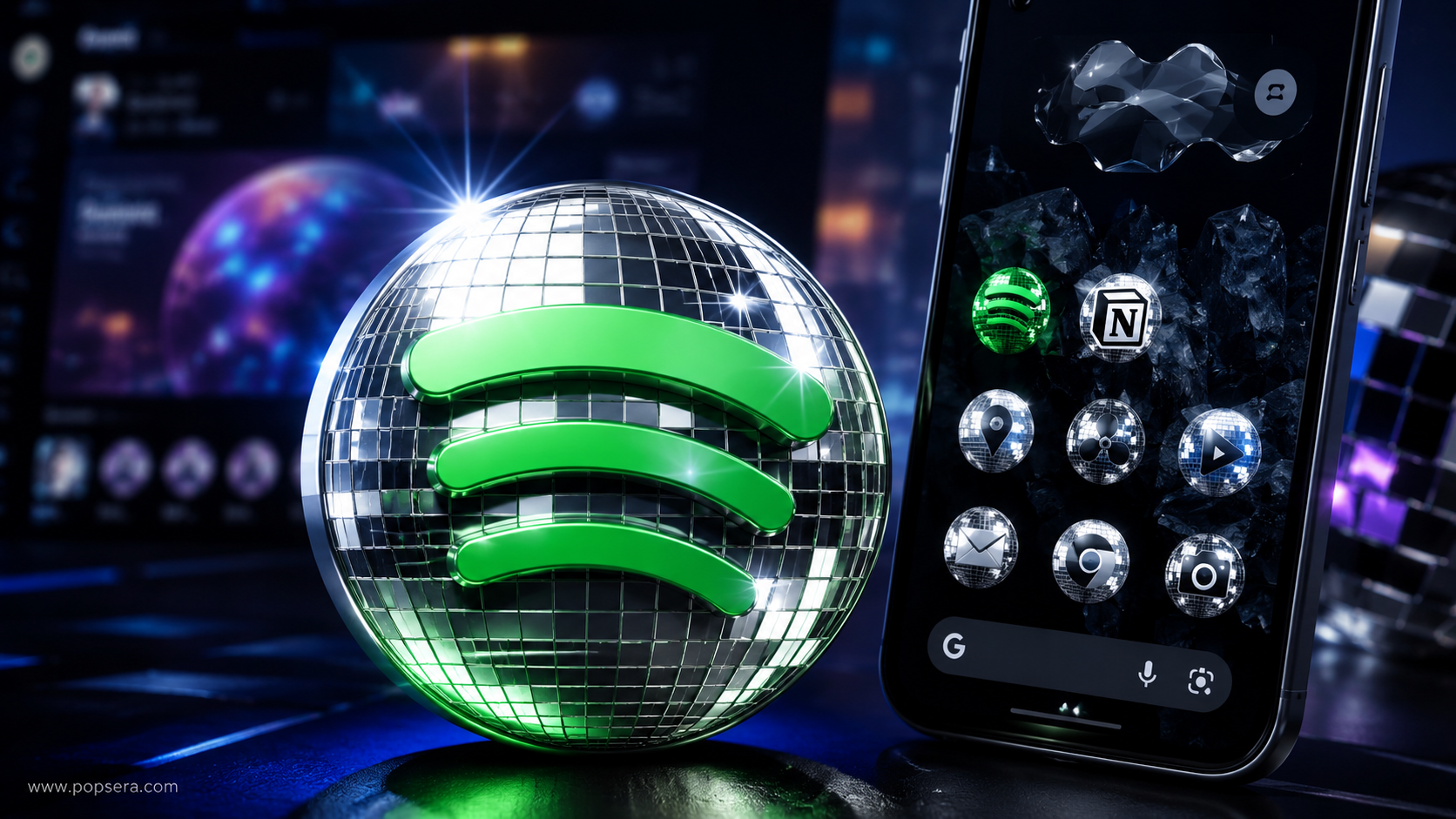




The early 2000s are no longer just a mood board. They are a full marketing strategy.
Heavy Y2K campaign nostalgia has moved from fashion TikTok into national ads, fast-food menus, beauty launches, denim campaigns, merch drops, and product design. Brands are not simply borrowing butterfly clips, low-rise jeans, chrome fonts, flip phones, and throwback pop songs because they look fun. They are using them because Y2K nostalgia gives shoppers something current marketing often struggles to create: instant emotional recognition.
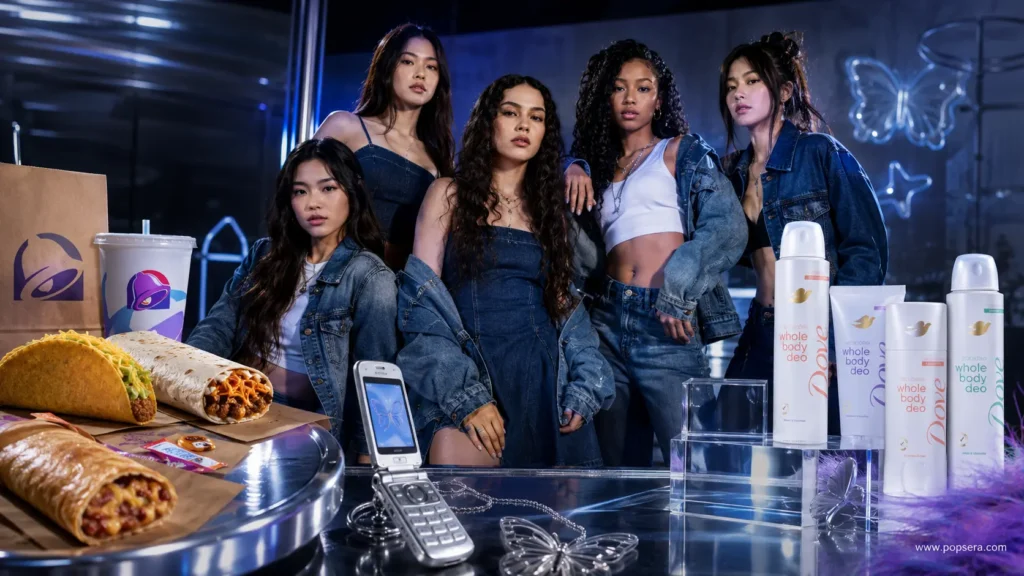
The clearest recent examples are easy to spot. Taco Bell built its Decades Y2K Menu around early-2000s fan favorites and merch, Gap put KATSEYE in a denim-heavy campaign set to Kelis’ “Milkshake,” and Dove launched a Grammy-timed Y2K-inspired campaign around a reworked mid-2000s pop hit. Different categories, same playbook: make the past feel wearable, shoppable, and shareable again.
Y2K nostalgia is no longer just a fashion trend
For years, the Y2K revival lived mostly in clothes: low-rise denim, baby tees, shiny handbags, frosted beauty, tiny sunglasses, chunky belts, and rhinestone-heavy styling. Now the look has become a broader cultural shorthand.
It signals a pre-smartphone internet era, even when the campaign itself is built for TikTok, Instagram, YouTube, and brand apps. That tension is the whole point. The aesthetic feels slightly offline, but the distribution is extremely online.
Taco Bell’s Decades Y2K Menu announcement did not stop at food nostalgia. The rollout included returning menu items, a Y2K merch capsule, an Ed Hardy collaboration, and a Crunchkin in-app taco-pet companion. That is not a casual throwback. It is nostalgia designed as a full brand world.
Gap took a similar route from another angle. Its Fall 2025 “Better in Denim” campaign paired KATSEYE with low-rise denim, choreography, and Kelis’ 2003 hit “Milkshake.” The ad works because it does not ask younger viewers to remember 2003. It lets them remix it.
Why brands are going this heavy on the early 2000s
The Y2K pull is unusually useful because it speaks to two audiences at once.
Millennials recognize the references directly: mall denim, glossy pop visuals, ringtone-era tech, Ed Hardy, old fast-food favorites, and songs that lived on radio, MTV, and burned CDs. Gen Z often experiences the same references as discovered history: an aesthetic they can style, edit, thrift, meme, and detach from its original context.
That makes Y2K nostalgia flexible. It can be sincere, ironic, glamorous, tacky, comforting, or chaotic depending on the brand.
It also gives companies a shortcut through a crowded attention economy. A new product may need explanation. A familiar song, silhouette, snack, or logo can land in seconds.
The strongest campaigns do more than copy the past
The weak version of Y2K marketing is easy to spot: a chrome logo, a flip-phone reference, a blurry digicam filter, and not much else.
The better version gives the old reference a reason to exist now.
Dove’s “Hot Like Us” campaign, launched during the 2026 Grammy Awards, used a Y2K-inspired reimagining of The Pussycat Dolls’ “Don’t Cha” to introduce its reformulated Alcohol-Free Whole Body Deo Spray. The reference was nostalgic, but the product pitch was current: whole-body deodorant, alcohol-free formulas, movement, comfort, and confidence.
That is why the trend keeps working. The past supplies the hook. The product still has to answer a present-day behavior.
Y2K nostalgia is also a reaction to digital fatigue
There is another reason early-2000s cues keep coming back: they represent a version of digital life that now feels oddly simple.
Flip phones, CDs, disposable cameras, chunky headphones, and glossy magazine-era fashion all belong to a time when technology felt exciting but not as all-consuming. That is why Y2K nostalgia does not only show up in fashion campaigns. It also shows up in retro tech, analog hobbies, and “offline” aesthetics that still spread through very online platforms.
Pinterest’s 2026 trend report leaned into that broader appetite for throwback comfort, including rising interest around nostalgic toys and 2000s kids toys. That does not mean every consumer wants to live in the past. It means the past is being used as a softer visual language for a louder present.
The risk: nostalgia can start to feel like a creative crutch
There is a limit to how many times brands can sell the same decade back to people.
Y2K nostalgia works best when it feels specific: the exact song, the exact cut of denim, the exact menu item, the exact mall-era reference. It gets weaker when it becomes a vague pile of rhinestones, pink gradients, and “remember this?” energy.
That is the challenge now. As more campaigns lean into the early 2000s, the bar gets higher. A brand cannot just gesture at nostalgia and expect people to care. The campaign has to know what it is reviving, who it is speaking to, and what the reference adds beyond a quick visual hit.
The smartest Y2K campaigns are not stuck in 2003. They use 2003 as texture.
Why this trend is not disappearing yet
Heavy Y2K campaign nostalgia still has room because it sits at the intersection of fashion, music, food, beauty, tech, and internet culture. It gives brands a way to build instant mood, tap into familiar icons, and invite audiences to participate through outfits, edits, hauls, reactions, and recreations.
But the next stage will likely be more selective. The campaigns that last will not be the ones that simply look the most Y2K. They will be the ones that understand why people are reaching for that era in the first place: comfort, playfulness, identity, and a little bit of escape.
The past is doing heavy lifting right now. The brands that win will know when to stop leaning on it and start making something new from it.